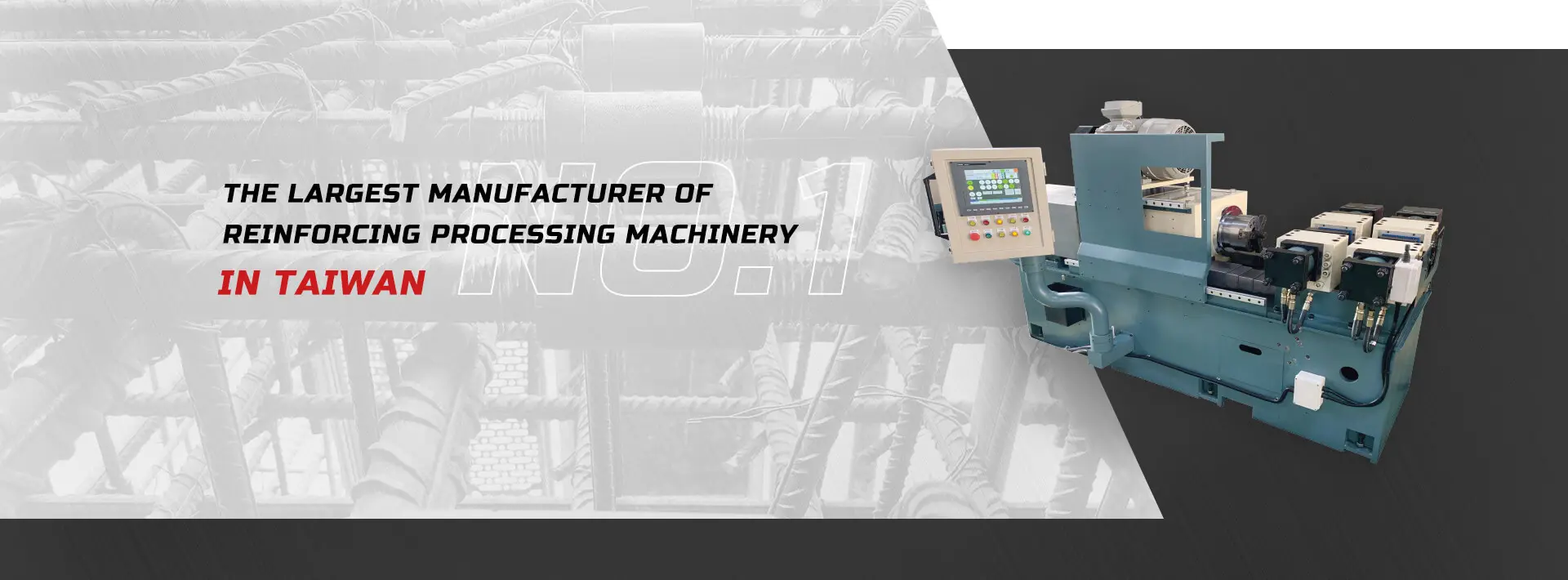

DH-FW30 Rebar Friction Welding Machine
Introducing our game-changing rebar friction welding machine that uses servo mechanism and our patented system. The new machine will utilise a servo motor to operate a screw via a patented system, hydraulic pressure readings can be provided as digital readings (rather than analog readings). With this new development it will be possible to create rebar joints using a friction weld process that will be extremely solid and consistent, significantly improve the strength of construction and will met and surpass all governmental safety requirements. The technology eliminates errors that arise from untrained personnel. When you enter the accurate data, the machine does all the work. It will make a great demonstration of successful friction welds between two pieces of steel reinforcement.
- Description
Friction welding uses mechanical friction heat and axial pressure to create heat at the surface interface(s) between two materials to be joined. The result is a plasticized bond between the two metals that becomes cohesive.
Welding has to be energy efficient to move to a low carbon society. By lowering the input heat levels, no splashes or smoke are made from the joint. So, no material either needed to fill or add to make the finished weld. It is changing the way manufacturing with metals is done.
The "Friction Welding" method has been a mainstay in Taiwan's construction industry for a long time. The process consists of three main stages: heating, steady pressures, and forge pressures. Two hydraulic cylinders are historically used to push the part together; however, thetemperature of the oil can fluctuate greatly, therefore reducing the overall success rate of the operation.
The construction sector has been knowing the advantages of "Friction Welding" for many years. We have developed a patented "Friction Welding Machine with Servo Mechanism", where a servo motor drives a screw, thus replacing the traditional hydraulic pressure values of a friction welding machine with digital values. This development guarantees that every bar produced by our machines has excellent weld strength with varying bar sizes; thus, the steel will meet or exceed the government standards for the structural safety of a building. Our technology also eliminates human error from operators who are not well trained, once verified data has been entered, and the machine will
automatically handle all functions post input of that data.
With the introduction of an advanced Servo drive in the machine, we are able to enhance efficiency of friction welding process used on rebar, along with increasing the overall speed and accuracy of the friction welding process. The touch screen is highly flexible and adaptable, and opens up more options and provides a great out-of-the-box experience for all users. Our friction welding process is highly efficient, increases productivity and ensures high-quality joint properties while providing safe working environments for employees. One method of increasing productivity is to use friction welding methods to produce the same part more efficiently compared with traditional fusion welding.
When manufacturing couplers, friction welding has a lower cost than forging the same part, and it's also done faster. Couplers produced by friction welding are as strong as couplers produced by forging, and have a cleaner surface.
- Specification
Automatic Friction Welding Machine
ITEMMODEL
DH-FW-30
Spindle Speed (RPM)
1800 RPM Max. Material size on spindle side (mm.)
Ø40*200L Main Spindle Motor
40HP Servo motor-Max. Thrust (TON)
23TON Welding capacity diameter range
Ø16- Ø40 Cooling model
Oil cooling Clutch
Wet multiple magnetic clutch Brake device
Wet multiple magnetic brake Braking time 0.2sec Control system Touch panel Welding material
Aluminum,Iron,Steel,Copper,Stainless steel,Steel bar - Video
- Principle
Distinct ways to weld
- By using a Welding surface to weld Metal on two sides from the end of a Welding Surface creates a Joint that is very strong. The Tensile Strength of the Joint and the Torsional Strength of the Joint is greater than the Tensile Strength of the Joint produced by the Welding Process such as Arc Welding or Argon Welding.
- Material combinations that are incompatible will save costs
- Friction Welding aids the joining of two types of metals that cannot weld through traditional welding process. This method is a new method of joining metals that costs less to produce. This process is very useful in the fabrication of large and light weight components.
- Improved accuracy of welded products
- After welding, both of the two material's ends show little deformation. The centre's eccentricity is within 0.5 mm/m. The welding technique produces high-quality workpieces. Therefore, producing workpieces with low machining allowance would reduce the consumption costs and expenditure saving.
- Green technology and Energy Efficiency
- The usage of the uniform heat source, which results in no arc and no hazardous emissions through the utilisation of the uniform heat source without the usage of the metallic materials, flux materials, and gases as the source of consumables and filler material, makes it safe for the working environment.
- Fast and Accurate Welding Process
The manufacturing cost of friction welding is lower than the cost of producing something by forging, and this lower cost allows for faster processing. In terms of strength, friction-welded parts have strength similar to that of forged parts, and their finishes are noticeably better (cleaner looking). - The Friction Welding Process to Produce Parts without Manual Welding Errors
By using machine-controlled friction welding, the process becomes consistent and repeatable; thus, eliminating human error. In addition, the weld quality achieved through this process is not tied to the skill of the operator, but is, in fact, far superior to what an operator could achieve based on his or her particular skill set.
- Features
Friction Welding Machine Advantages:
Employs sophisticated servo drive techniques for shifting accurately; provides for flexible, fast-moving shifting that can be adjusted to meet the speed of shift requirements; maintains continuous, controlled oil temperature without disruption; integrates an extremely flexible full-touch panel; option to include a device for automatic cutting of waste materials; uses components from reliable world-class manufacturers, which ensures precision; achieves shaping speeds five (5) times faster than conventional machining methods; provides for fully-automated production, therefore providing increased output and reduced labor needs.
- Optional1.Optical scale positioning module
-Easy and fast operation, precise length adjustment
-Detectable work piece lengthOptical scale positioning module2.Rotary angle positioning
-both ends of the work piece after welding can be stopped at certain angles3. Inverter
-Adjustable spindle speed
-Save spindle start energy consumption
-Extended service lifeInverter4.Chip system
-Increased chip system
-Servo Motor Chips (Simple PLC Control or CNC Program Control)
Chip system5.Electric control box cooling system
-Standard original fan
- Upgradeable the heat exchanger or air conditioner.
Electric control box cooling system6.Electric control box cooling system
-Standard original fan
- Upgradeable the heat exchanger or air conditioner.7.Mechanical full cover safety guard8.Bar Conveyor9. Coulpers clamping robot - Advantages of servo control
Outstanding characteristics of Our Friction Welding Equipment
- Stable Performance Regardless of Oil Temperature
- Produces Welds with High Precision
- Angle Management Expands the Use Case, Best for Adjusting the Phase of the Workpieces
- Compared to hydraulically operated machines, Servo operated machines generate less carbon emissions and are a more efficient option.
- Presence of oil-free environment reducing the workplace hazards.
- There is almost negligible generation of oiled waste and thus it is at an environmentally conscious Workplace.
- The application of feedback in the control of the forge force at the lowest speed will make the machine run smoothly.
- Consistent Performance Generation under different operating Conditions (various temperature and Humid conditions).
- The compactness of the hydraulic unit leads to minimum space occupation and also works In Low noise.
- DH-FW Specification form
Machine specifications
DH-FW30
DH-FW45
DH-FW60
welding ability
Round rod diameter
Ø9 ~ Ø25 Ø15 ~ Ø36 Ø20 ~ Ø60 Pipe Fittings
Ø16 Ø48.3 Ø88.9 The Max. length of the rotating side
300 mm 300 mm 300 mm The length of the fixed side
9m 9m 9m Maximum thrust
Frictional heating time
8,000 Kg 10,000 Kg 12,000 Kg Forging pressurization
16,000 Kg 20,000 Kg 26,000 Kg Spindle
Number of spindle rotation (50Hz)
3000 rpm 2250 rpm 1780 rpm Number of spindle rotation (60Hz)
2500 rpm 1780 rpm 1570 rpm Clutch Direction
Oil Actuated Multi-Disc Clutch and Brake Clutch Torque
800 (N.m) 800 (N.m) 1600 (N.m) brakes System Direction
Oil Actuated Multi-Disc Clutch and Brake brakes System Dynamic Torque
800 (N.m) 800 (N.m) 1600 (N.m) Brakinf Time
0.3 sec 0.3 sec 0.3 sec Spindle Fixture
Three-jaw 6”/(Hydraulic Pressure) Three-jaw 8”/(Hydraulic Pressure) Three-jaw 10”/(Hydraulic Pressure) Slide Speed
Rapid Traverse rate
20 m/min 20 m/min 20 m/min Machine Processing speed
1~1000 mm/min 1~1000 mm/min 1~1000 mm/min The Max. moving
150 mm 200 mm 250 mm work piece clamping manner
Vise splint method
Horizontal double-open synchronous fixture Clamping force
8,600 Kg 17,000 Kg 25,000 Kg Processing Methods
Size adjustment
0 ~ 100 mm 0 ~ 100 mm 0 ~ 100 mm Time adjustment
0 ~ 999 秒 0 ~ 999 秒 0 ~ 999 秒 Motor Power
Spindle
22 kw 30 kw 37 kw Hydraulic Pressure
5 kw 9 kw 9 kw Servo motors
7 kw 9 kw 11 kw Hydraulic Oil Temperature cooling system
1.5T / 1.1 Kw 2T / 2 Kw 2T / 2 Kw Dimension
Machine Dimensions
2750 x 2800 x 2000 2750 x 3100 x 2000 2750 x 3400 x 2000 Machine Weight
6,000 Kg 6,800 Kg 7,300 Kg
Related Products
DH-FW60 Rebar Friction Welding Machine