Rebar Friction Welding Machine
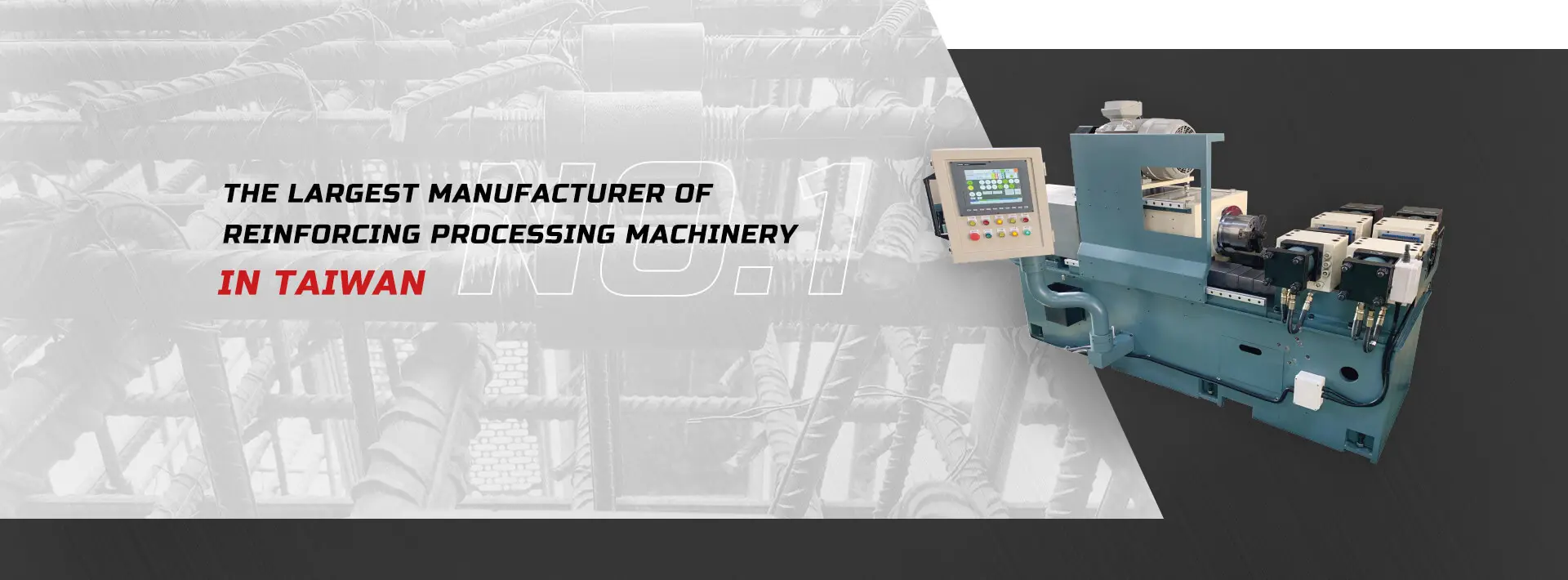
- Our patented “Friction Welding Machine with Servo Mechanism” uses a servo motor to drive a screw and turns traditional hydraulic pressure values into digital data. Making it possible to produce well coupled Rebar with consistent quality and therefore greatly reinforcing the structural integrity of any building while exceeding government safety regulations. Also, our technology also eliminates any human errors that may be caused by inexperienced workers. And once the verified data have been entered, our machine will handle the rest of the process.
- Using the latest servo drive, the welding efficiency of our rebar friction welding machine can be faster and more accurate.
- Our full touch panel can be much more flexible, changeable and high degree of freedom which is able to equipped with cutting device and driving pushing structure by automatic cutting waste servo motor. The use of friction welding in production process ensures such benefits as high process efficiency, high productivity, very good properties of joints and safe working conditions.
- The coupler cost of using friction welding is lower than that offorging, and it can be formed quickly.Its strength is no less than that of forged products, and the surfaceis cleaner.
- Advantages of friction welding machine
- Using the latest servo drive, the shift is more accurate
- Free and fast moving shift speed
- Does not affect the oil temperature
- Full touch panel can be flexible and flexible, with high degree of freedom
- Can be attached with cutting device, automatic cutting waste
- Using well-known brand parts from all countries, accurate accuracy
- 5 times faster than traditional car shaping
- Fully automated production, increased production and reduced manpower

We have patented the "Rebar Friction Welding Machine With a Servo Mechanism". With this product, the patented mechanism uses a servo motor to rotate a screw, and the result of this movement is used to generate a number for use from pressure measurements of the traditional hydraulic method. The technology that we have developed allows for the creation of the properly joined rebar through friction welding, producing a standard of quality from our machine that far exceeds the requirements of government safety standards. There is the elimination of human error most often caused by inexperienced workers. After the machine has been set up with all the required verified data, the machine completes the process automatically, which demonstrates the efficiency with which it is able to complete a rebar friction weld.

The invention is a "Rebar Friction Welding Machine with Servo Mechanism", which uses a servo motor to turn a screw and converts the traditional hydraulic pressure of the welding process to digital information that can be accurately recorded. The invention provides innovative means for producing quality-coupled rebar by friction welding so the structure of the building is more stable than government safety requirements. All the associated work experience based human errors appear to be eliminated, which makes it very cost effective solution. After the data has been verified and input, this machine assures that the machine runs smoothly throughout the production process and shows the effectiveness of rebar friction welding, friction welding machine, and rebar welding service.
Introducing our game-changing rebar friction welding machine that uses servo mechanism and our patented system. The new machine will utilise a servo motor to operate a screw via a patented system, hydraulic pressure readings can be provided as digital readings (rather than analog readings). With this new development it will be possible to create rebar joints using a friction weld process that will be extremely solid and consistent, significantly improve the strength of construction and will met and surpass all governmental safety requirements. The technology eliminates errors that arise from untrained personnel. When you enter the accurate data, the machine does all the work. It will make a great demonstration of successful friction welds between two pieces of steel reinforcement.